
Commercial Irrigation
Irrigation designs according to Zimbabwe Irrigation Technology Centre (ZITC), standards Installation of New Irrigation systems, upgrade of existing irrigation systems Maintenance of existing irrigation systems & Installation of Fertigation systems Options of Manual or Various Automated(Decoder / Hard Wired / Battery Operated) irrigation systems
PIVOTS
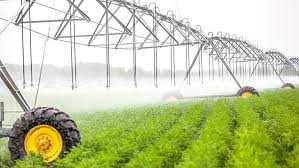
Mechanized irrigation technology has changed the face of the earth. Literally. Aerial photos fifty years ago didn't show fields as they are today. Now the countryside, especially in the arid climates of the world, is dotted with circles. Areas that farmers never before would have dreamed of growing a crop are now as fruitful as any. Mechanized irrigation preserves our food supply, conserves our water, and just makes life easier and more profitable for those who grow the world's food. And let's talk profits. Typically, a grower will be able to pay for the machine within about three years, using increased profits. Pivots deliver higher yields. They use less labor, and pumping costs are often lower.
Valley® Center Pivots were the first mechanical move machines in the industry, and remain the best built. With multiple-function equipment, you can germinate, fertigate, chemigate and manage salinity through leaching. And practically any crop can be grown under a pivot, with crop clearances ranging from 1,85m – 5m, and drive units to meet crop and management needs.
• Towable Pivots
Valley® Towable Pivots set the standard for the industry with our 8000 structure and computerized controls, all refined and field-proven to provide growers with the most economical way possible to begin using mechanized irrigation.
• Easily irrigate 2- to 121.5-hectares
• Maximize the investment by easily towing the machine between two, three or more fields
• Each machine can be towed from one field to another in less than an hour
• Choose from an on-board engine generator or public power supply
• All four towable options allow the use of any of our pivot panel options
Compare Towable Pivots to Other Irrigation Methods:
• Efficient time management
• Irrigation scheduling versatility
• Less labor-intensive
• More precise water application
• Less wind distortion
• More chemical application flexibility
DRIP IRRIGATION
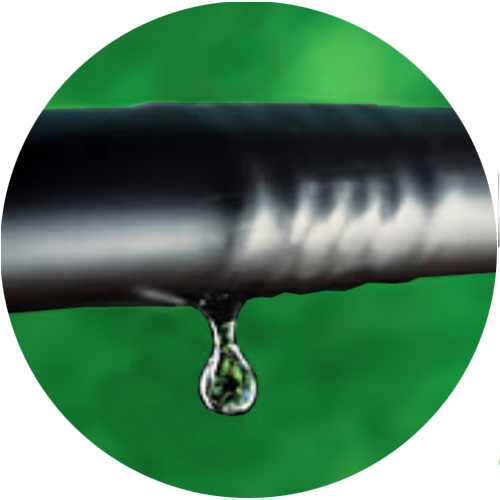
It is getting increasingly more important than ever to use water resources wisely and to irrigate smartly. Drip irrigation is a technology widely used to apply water directly where it is needed leading to precise and efficient irrigation.
This is primarily because, in contrast to other forms of irrigation like gravity or sprinkler irrigation, drip irrigation is applied slowly and more precisely, with more water targeting the plant's root zone, and without regard to the presence of wind. This minimizes the use of water and integrates your crop, soil, nutrients, and water for best results.
Drip Irrigation delivers water directly to the plant roots and avoids unnecessary wetting of plant leaves which conserves water by reducing evaporation and deep drainage, as well as water loss through wind. Many farmers who have chosen to use drip irrigation have enjoyed improved profitability through increasing crop yield and quality while reducing costs incurred from water, energy, labour, chemical inputs and water runoff.
In addition, drip can eliminate many diseases that are spread through water contact with the foliage
To avoid plugging the relatively small passages inside drip emitters the water is filtered thus removing minerals or organic materials from the irrigation water.
Because water is applied directly to the root zone, an opportunity to apply nutrients and to fertigate is achieved.
The advantages:
• Water application efficiency.
• Application rates are low so water may be fed to the crop or plant root zone in precise amounts
• Moisture within the root zone can be maintained
• Eliminates water loss from the wind
• Usually lower operating pressure than other types of pressurised irrigation hence reduction in energy costs.
• Soil erosion on sloping terrain prevented by Low application rates.
• Levelling off of the field not critical.
• Possible to irrigate irregular fields.
• High uniformity in the distribution of water due to controlled output of each nozzle.
• Fertigation is achievable with this type of system
*if designed, installed and managed correctly.
MICRO SPRINKLERS
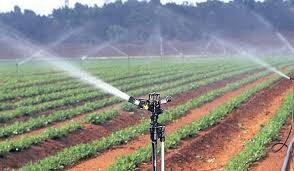
Micro sprinklers (also known as: spray jets, micro sprayers, misters) are a cross between surface spray irrigation and drip irrigation and are rated by flow rate, wetting diameter or radius. Like drip emitters, they operate at low pressures but create a larger wetted area then drip irrigation.
Micros are used when low volume overhead irrigation is desired, and for areas where drip emitters are not practical.
The micro sprinklers and micro sprayers deliver water through micro tubing to a series of nozzles attached to risers, and have small to medium sized droplets with good uniformity of coverage and lower precipitation rate, allowing longer watering time with less runoff.
Micro sprayers are used extensively in agriculture using one micro sprayer per tree and under the tree canopy. Micro-Spray Irrigation provides many of the same benefits as drip irrigation with a few exceptions.
The advantages:
• Water application efficiency.
• Water savings: reduced evaporation and run-off combined with smaller flow rates
• Moisture within the root zone can be maintained
• Eliminates water loss from the wind
• Usually lower operating pressure than other types of pressurised irrigation hence reduction in energy costs.
• Soil erosion on sloping terrain prevented by Low application rates.
• Adapt to any topography and irrigate irregular fields.
• Fertilizer/nutrient loss minimized due to root zone targeting
• High uniformity in the distribution of water due to controlled output of each nozzle.
• Fertigation is achievable with this type of system
*if designed, installed and managed correctly.
IRRIPOD
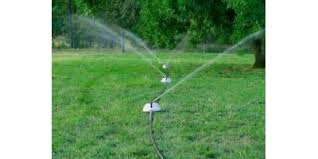
Irripod Plus is a flexible, cost effective pipeline sprinkler irrigation system for pasture and forage crops. Designed to operate at low pressure Irripod Plus distributes water on a slow absorption rate over a 12-24-hour period. This allows for effective absorption into the soil whilst eliminating pooling and run off. The system only requires movement once per 12-24 hour period. Irripod Plus is a component system that is simple to install and manage. The system utilises protective Pod Skid covers over sprinklers that are attached to an irrigation pipeline. Irripod Plus can be configured to suit individual requirements dependant on application rates, the distance to be irrigated and the rotation intervals appropriate for the situation. Each Irripod irrigation line can be customised to suit varying paddock sizes and shapes while also accommodating existing obstructions.
Irripod irrigation lines are strong, lightweight and flexible, easily moved while the system is operating by attaching the lines to an four wheeler or farm vehicle.
The flexibility of Irripod Plus means the system can be configured for many different end uses in addition to traditional pasture and forage crop irrigation; these include orchards, golf courses, sports fields, race tracks, dust suppression in developing housing sub-divisions and bush fire protection.
BARGE
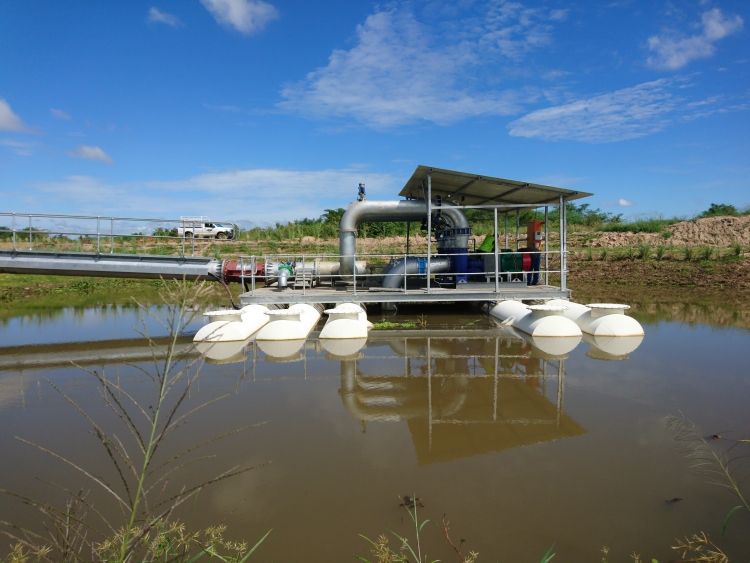
Pump-It Africa can provide purpose designed, custom built floating pump stations. These are all designed and manufactured in house to the highest specifications, to match the tough African conditions in which they operate.
Floating pump stations provide three significant advantages over terrestrial based pump stations.
1) Do away with the civils required for a terrestrial station,
2) The pump station adjusts to the level of the river, keeping the equipment on the pump station safe from flood damage, and
3) Favourable suction conditions for the pump. This allows for the selection of readily available, cost effective pumps for which spares are also readily available.